Bolt vs Lovable: Which One Should You Use If You Only Need a Website?
Field notePublished Oct 13, 2026Verified Oct 13, 2026
Bolt and Lovable both cost $25 a month for their first paid plan, and both need that plan before your site can use a custom domain or lose the vendor's badge. The difference is the meter: Bolt sells tokens, and a message costs more as the project grows; Lovable sells credits, and publishes what typical changes cost. If you only need a website, Lovable's credit pricing is easier to predict, but a fixed-price site builder may beat both. If you are building an app and want a large monthly allowance with per-seat team billing, Bolt fits better.
This comparison is written for people who want a website out of one of these tools, which is the case most comparisons skip. It is built from each vendor's pricing page and help documentation, read on 9 October 2026. We did not run the two tools against each other for this article, so there are no timings or output scores here, and we give Bolt no rating because it is not on our ranking. Lovable sits second on that ranking.
At a glance
| Bolt | Lovable | |
|---|---|---|
| Free plan | $0: 1M tokens a month, 300K a day | $0: 5 build credits a day, up to 30 a month |
| First paid plan | Pro, $25/mo billed monthly | Pro, $25/mo or $250/yr |
| Paid allowance | From 10M tokens a month, no daily limit | From 100 credits a month, plus 5 a day |
| Unused allowance | Rolls over; valid 2 months from issue | Rolls over; expires 2 months after issue |
| Extra usage | Token reloads on top Pro tier or annual plans; never expire | Top-ups $15 per 50 credits; valid 12 months |
| Custom domain | Pro | Pro |
| Vendor branding removed | Pro | Pro ("Edit with Lovable" badge) |
| Teams | $30 per member per month | Business from $50/mo; unlimited members on every plan |
Tokens vs credits: why the meters cannot be compared one-to-one
Several ranking pages set Bolt's 10 million tokens against Lovable's 100 credits as if one were a hundred thousand times more generous. They measure different things, so the comparison means nothing.
Bolt's help centre says most token usage comes from reading, understanding and syncing your project's files, so larger projects use more tokens per message. A request that is cheap in a three-file landing page gets more expensive when the same project has grown to thirty files. You can see your balance, but you cannot know ahead of time what one message will cost.
Lovable prices the work instead. A Plan mode message costs 1 credit plus any research it triggers, and Build mode messages are priced by complexity. Lovable publishes examples: 0.50 credits to make a button gray, 0.90 to remove a footer, 1.20 to add authentication, and 2.00 to build a landing page with images. At $25 for 100 credits, those cost from about 13 cents to 50 cents. A long run pauses to check in once it passes 20 credits by default, so a big request asks before it keeps spending.
For a website, where most changes are small and repetitive, the credit model is easier to budget. For a growing app, Bolt's large monthly allowance may go further. Without running the same project through both, which we have not done, nobody can tell you how many Bolt tokens equal one Lovable credit.
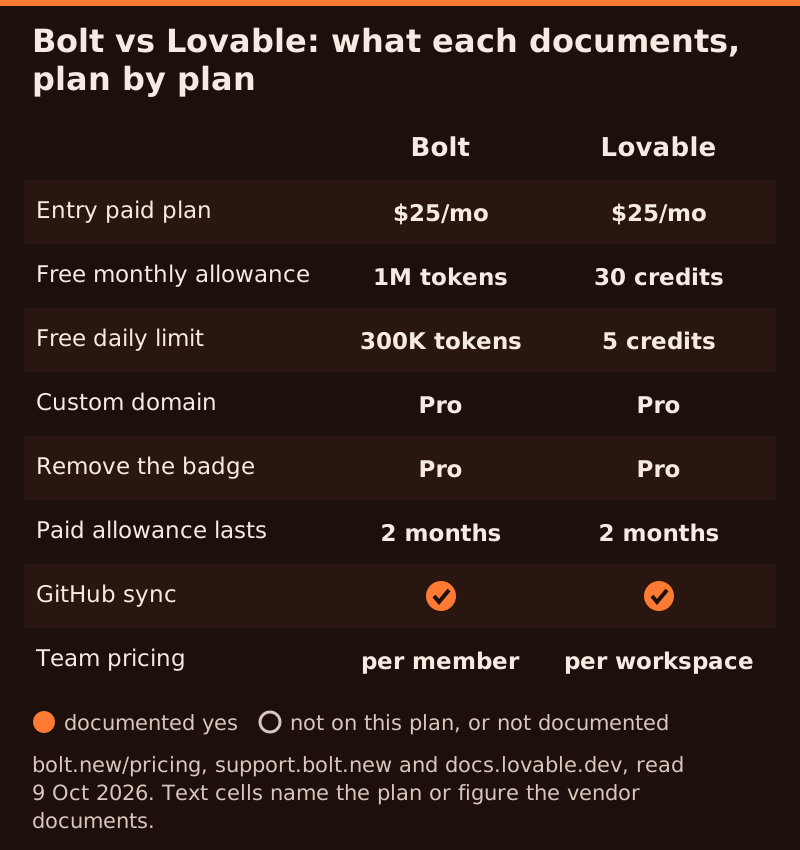
Pricing and limits side by side
The free tiers are shaped differently. Bolt's free plan gives 1 million tokens a month with a 300,000 daily limit, and its pricing page lists website hosting, up to 333,000 web requests and unlimited databases on it, with Bolt branding on the site. Free tokens reset on the first of each month and do not roll over. Lovable's free plan gives 5 build credits a day until the monthly cap of 30, which on Lovable's own example arithmetic is the first six days of the month, plus a monthly grant of 20 Cloud credits and 4 AI credits.
On the paid side, the rollover rules are almost the same. Bolt's paid tokens are valid for two months from the start of the billing cycle that issued them, and Lovable's monthly plan credits expire two months after they are issued. Both need an active subscription to keep rollover. Bolt is blunt about cancelling: you lose every allocated token, rollover included, when the billing cycle ends. Extra usage differs more. Lovable sells top-ups on Pro at $15 per 50 credits, which is $0.30 a credit, valid for 12 months. Bolt sells token reloads only on its highest monthly Pro tier or an annual plan, and reloads do not expire.
Annual billing exists on both. Lovable's Pro is $250 a year, two months free against monthly. Bolt says yearly billing saves up to 28% but does not print the yearly prices on the page we read, so we have not estimated them.
Publishing a website on each
Both tools host what they build. Bolt's free plan lists website hosting with Bolt branding on the site; Pro removes the branding, adds custom domain support and raises the web-request ceiling to 1 million. Lovable's free plan cannot use a custom domain and keeps the "Edit with Lovable" badge; Pro adds both. So the real entry price for a website on your own domain is $25 a month on either tool, or $250 a year on Lovable.
What happens when you stop paying matters for a website. Lovable states that a published site stays live when your credits run out, and its pages keep serving; apps relying on its built-in backend or AI features can pause. Bolt's pricing page does not say what happens to a hosted site after cancellation, and we did not find it in the help pages we read, so check before you downgrade.
Code ownership and export
Both connect to GitHub. Bolt's help centre describes backing a project up to a GitHub repository with automatic commits, and pulling changes made outside Bolt every 30 seconds; only the project owner can connect it. Lovable lists Git sync with GitHub, GitLab and Bitbucket on every plan, Free included, while editing and downloading the code inside Lovable are Pro features. In practice, either tool lets you leave with your code, and both projects can carry on in an ordinary developer workflow.
That cuts both ways for a website owner. Owning the code is valuable if a developer will work on it later. If nobody on your team reads code, the repository is a backup you cannot easily use, and a visual site builder would serve you better.
Where each is the wrong tool
Lovable is the wrong tool if you want an allowance you never have to think about: every change spends credits, and the published examples make that visible. It also gets expensive for a team that needs more credits, because its Pro tiers climb in steps from 100 credits up to 10,000 at $2,250 a month. Bolt is the wrong tool if you need to budget each change in advance, because its cost per message depends on how big your project has become. And both are the wrong tool for a brochure site that a non-technical owner will update for years. A site builder stores that content in an editor anyone can use, at a fixed price.
If that last description fits you, read our ranking of AI website builders first: Framer's Basic plan is $10 a month on yearly billing with your own domain, and you can try Framer free before committing to either code generator.
Who should pick which
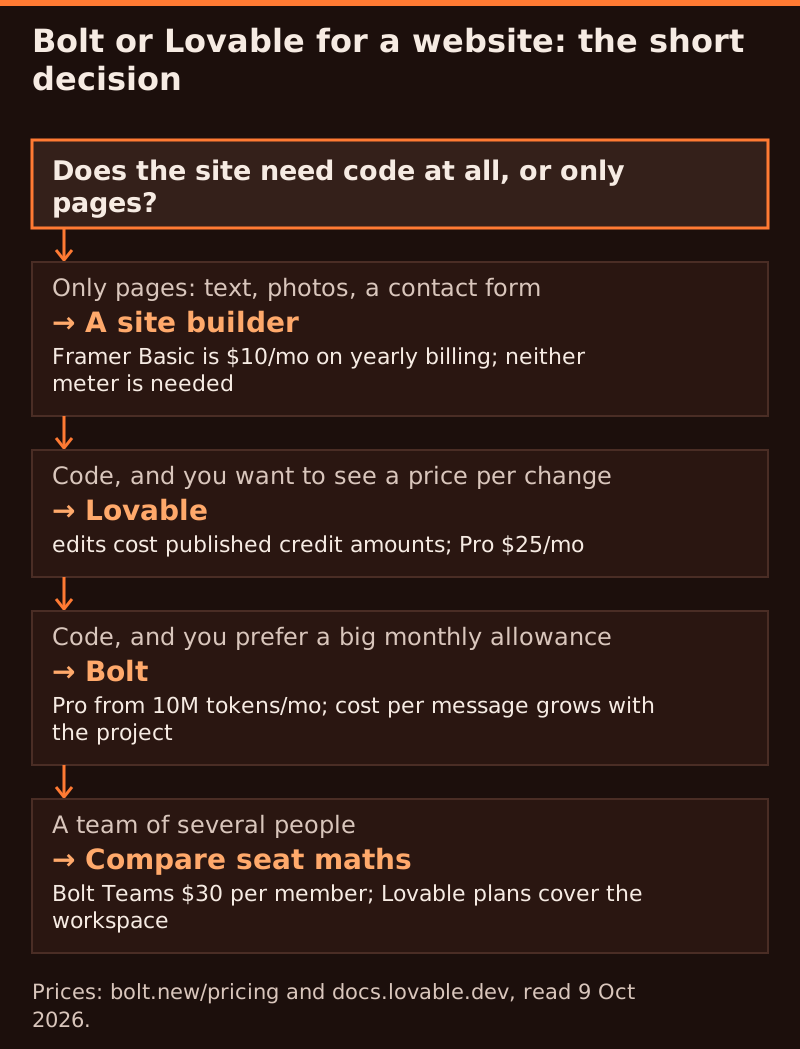
For the website use case, our lean is Lovable, because a published price per typical change suits the slow, steady edits a website gets, and because its Git sync works even on the free plan. Start on the free tier, see what your real changes cost in the message menu, and only then move to Lovable Pro. Our Lovable review covers the editor and its output in more depth.
Edge cases
- Students. Lovable gives students and teachers 50% off Pro with 100 credits for up to 12 months, on monthly billing only. We found no student pricing on Bolt's page.
- Teams of five. Bolt Teams is $30 per member per month, so five people cost $150 a month. Lovable plans cover the workspace with unlimited members, so five people share one credit balance.
- Big projects. If your project will grow large, Bolt's token use per message grows with it, which its help centre states directly. Watch the balance in the first month.
- Cancelling mid-project. On Bolt, all tokens go at the end of the cycle. On Lovable, the published site keeps serving, but rollover credits also need an active subscription.
Bolt vs Lovable: common questions
Is Bolt better than Lovable?
Not for most website owners. Both charge $25 a month and both need that plan for a custom domain. Lovable publishes what typical changes cost in credits, which makes a website's slow trickle of edits easier to budget. Bolt suits app builders who want a large token allowance.
What does Bolt.new cost?
Bolt has a free plan with 1 million tokens a month and a 300,000 daily limit, and Pro at $25 a month billed monthly, starting at 10 million tokens with no daily limit. Teams is $30 per member per month. Yearly billing saves up to 28%, but the page does not print the yearly prices.
Are Bolt tokens and Lovable credits the same thing?
No. Bolt counts the tokens its AI processes, mostly reading and syncing your project files, so bigger projects cost more per message. Lovable charges credits per message based on the work done and publishes examples from 0.50 to 2.00 credits. There is no fixed exchange rate between them.
Can I use my own domain on the free plans?
No. Both Bolt and Lovable keep custom domains on paid plans, and both show their own branding on free sites. On either tool the cheapest way to publish on your own domain is Pro at $25 a month, or Lovable's $250 annual plan.
Can I export my code from Bolt or Lovable?
Yes. Bolt backs projects up to GitHub with automatic commits, and Lovable offers Git sync with GitHub, GitLab and Bitbucket on every plan, including Free. Downloading code from inside Lovable needs Pro.
See how this stacks up against the field in our best AI website builders ranking, or check how we test.